

Digital transformation is taking over the manufacturing industry. Implementing a digital thread is key to successful digital transformation as it ensures streamlined workflows and accessible data. Digital thread implementation can be enhanced with the integration of tools and product solutions. Let’s explore how integrating AR with CAD and PLM benefits frontline workers.
What is Augmented Reality (AR)?
AR or Augmented Reality, is a technology that overlays digital information such as images, videos, or 3D models onto the real world. AR has many uses. The first is providing information about its surroundings such as highlighting a part of a machine. AR also allows users to interact with digital elements such as manipulating 3D objects. While AR is widely used in the entertainment industry in theme parks and immersive experiences, there are more common uses across industries. One example of this is using AR for training and educational purposes. Since it can simulate real-world scenarios, AR is great for immersive training such as practicing medical procedures. Lastly, businesses may use AR for marketing and retail such as having interactive advertisements. A great example of this is virtual try-ons for makeup or clothing.

Benefits of AR Integration with CAD and PLM
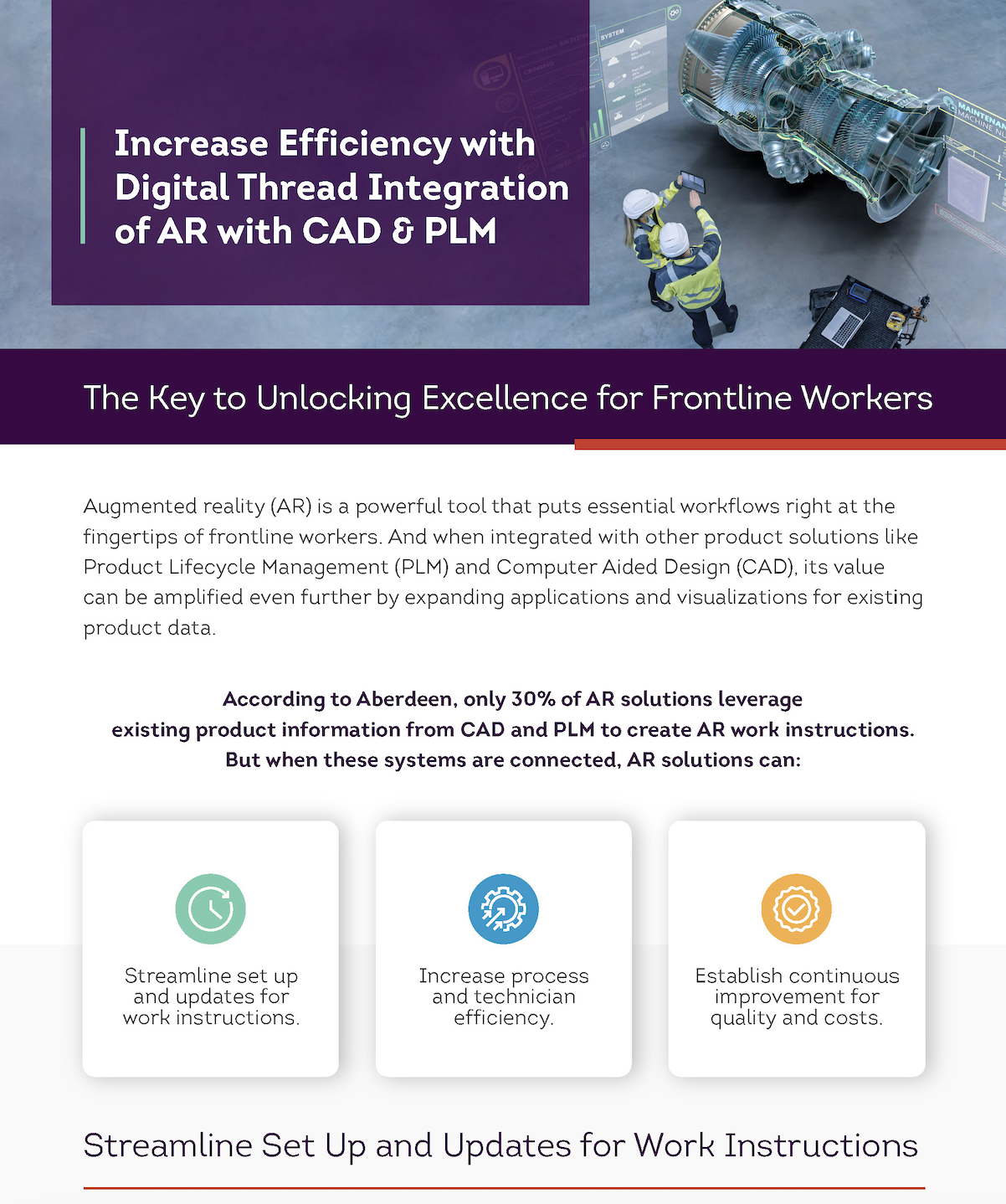
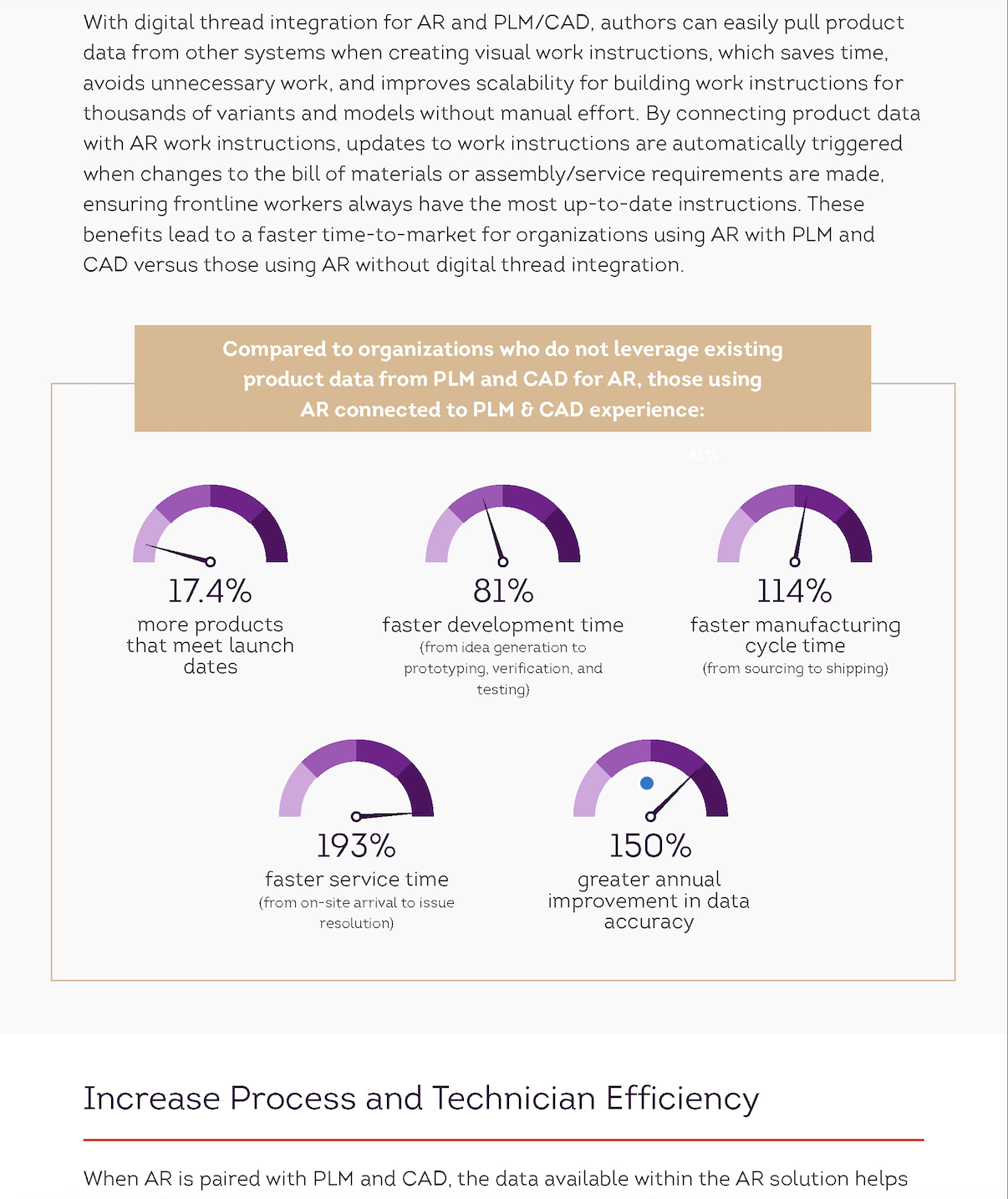
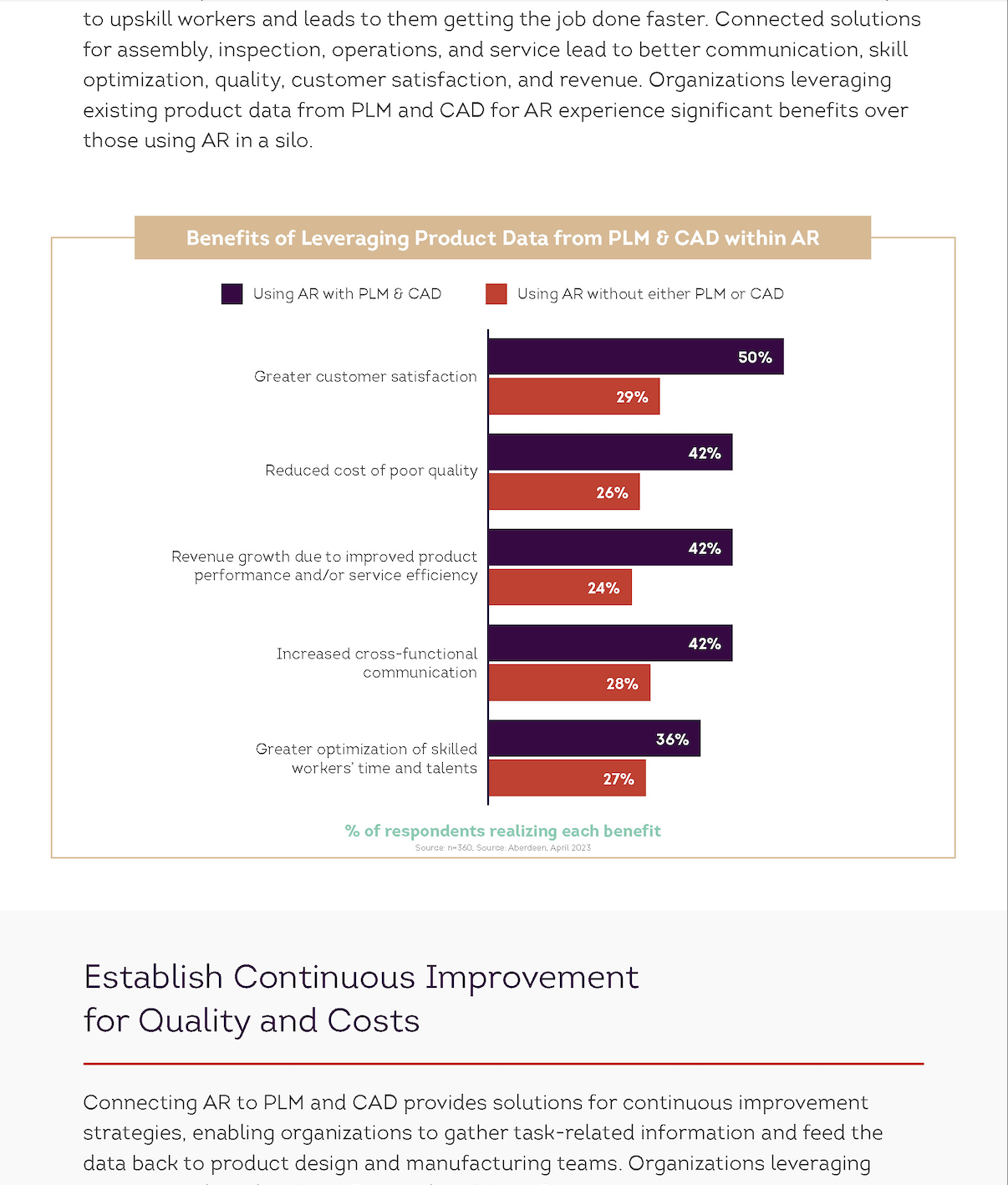
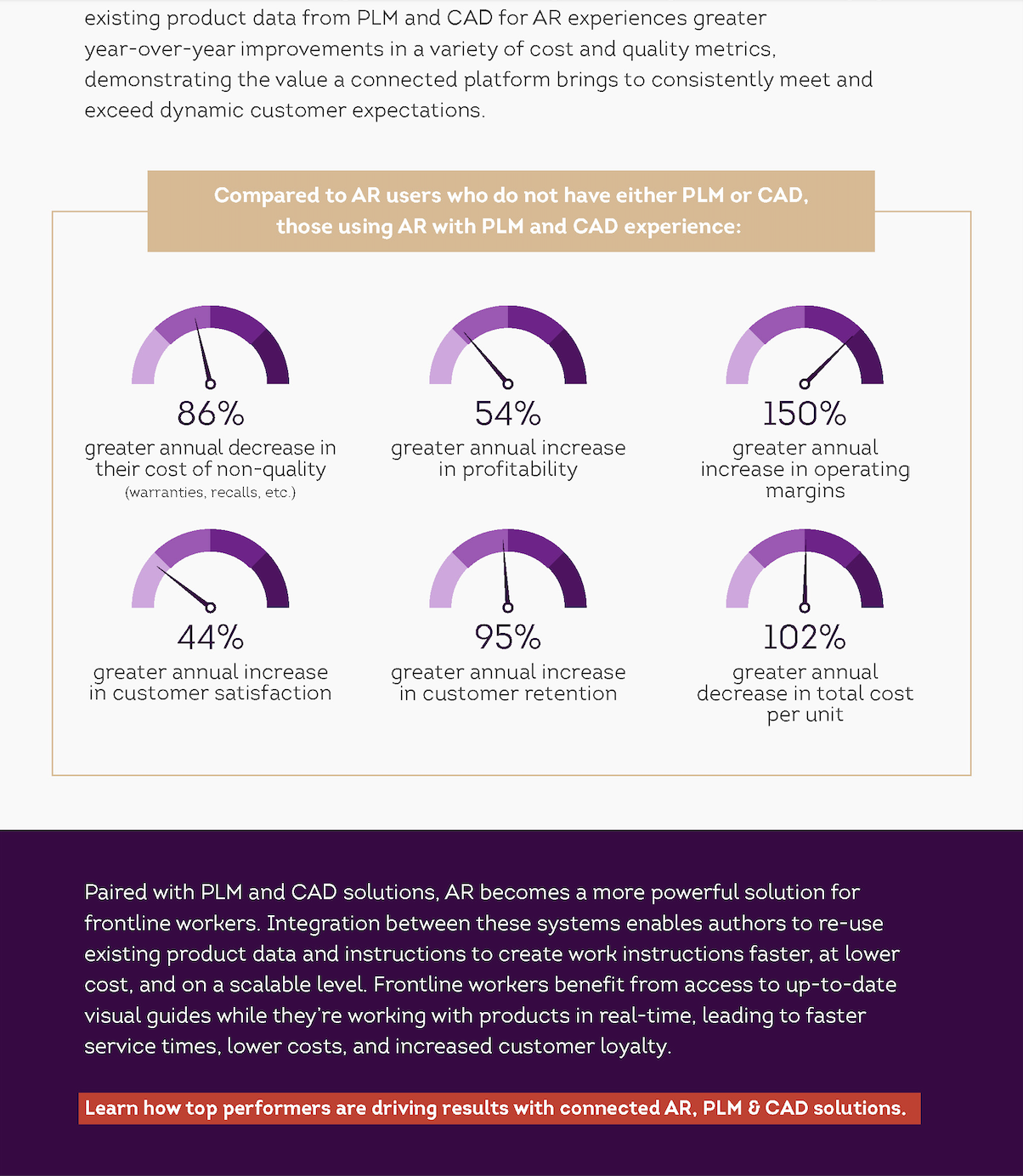
Digital thread integration of AR with CAD and PLM combines multiple technologies to enhance product development. Computer-Aided Design (CAD) is a great visualization tool on its own, but combining it with AR takes it to the next level. Users can visualize 3D models in real-world environments due to the capabilities of AR. This may also eliminate the need for physical prototypes. Discover more advantages of CAD and AR integration as well as how these aid Product Lifecycle Management in the following infographic.

Implementing AR Integration with CAD and PLM
Now that we have covered the many benefits of this integration for the digital thread and frontline workers, you may want to implement AR integration for your business. SPK’s experts can answer questions about CAD, PLM, AR, the digital thread, and integration. To learn more, contact us.